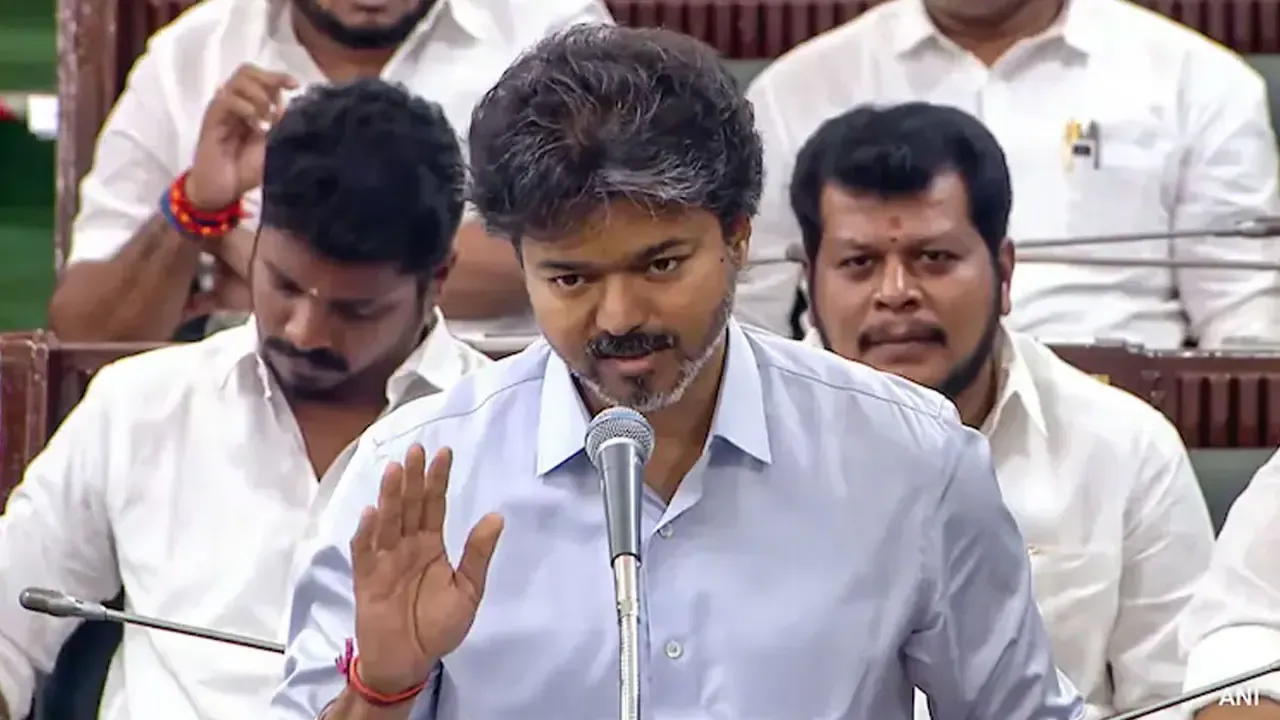
A growing campaign projecting Tamil Nadu Chief Minister C. Joseph Vijay as a potential prime ministerial candidate for 2029 has drawn sharp pushback from both the opposition DMK and the Congress, his party’s alliance partner in the state. Supporters of the Tamilaga Vettri Kazhagam have amplified the idea through statements by ministers and posters on the ground, while critics have dismissed it as premature and unrealistic.
Origins of the Pitch
The “Vijay for PM” narrative gained fresh momentum after a recent opinion survey placed the Tamil Nadu chief minister among the top preferences for the country’s highest elected office. The survey ranked him third, behind the incumbent Prime Minister and the Congress leader. Sections of the TVK interpreted the finding as validation of wider national appeal.
Party leaders and ministers began speaking more openly about the possibility. Some argued that the next prime minister should come from the South, with Tamil Nadu positioned as a natural source of such leadership. Others went further, directly describing Vijay as a future national leader. The rhetoric spilled beyond speeches. Posters appeared in parts of the state, including Thoothukudi, carrying messages that cast the current chief minister as “tomorrow’s prime minister.”
The campaign reflects the rapid political rise of Vijay, a former film star who transitioned into electoral politics and led his party to power in Tamil Nadu. Having completed the early months of his tenure as chief minister, his supporters appear eager to project a larger stage.
Congress Response from Within the Alliance
The Congress, which shares power with the TVK in Tamil Nadu, has responded with clear discomfort. Senior state leaders have publicly criticised the tone of the campaign. The Tamil Nadu Congress president described the statements as evidence of a continuing “fan mentality” among some TVK functionaries, suggesting they had not fully shifted from cinematic admiration to the realities of governance and national politics.
Other Congress voices have been more direct. Party leaders have reiterated that Rahul Gandhi remains their sole prime ministerial face. One Congress minister in the state cabinet went further, stating that the party’s ministers would resign if the TVK refused to accept this position for the 2029 parliamentary election. The remark underscored the sensitivity of the issue within the ruling coalition.
Congress MPs have also sought to inject constitutional realism into the discussion. They have noted that becoming prime minister ultimately depends on commanding a majority in the Lok Sabha, a threshold that no amount of state-level popularity can automatically guarantee. While acknowledging the right of every party to harbour ambitions, they have urged the TVK to focus on administration in Tamil Nadu rather than national projection.
The unease is understandable in political terms. The Congress ended its previous arrangement with the DMK and entered a new partnership with the TVK. It had expected to retain clear ownership of the national leadership narrative while benefiting from Vijay’s popularity in the South. The emergence of a competing claim, even if informal, complicates that calculation.
DMK’s Mockery from the Opposition
The DMK, now in opposition, has treated the campaign with open ridicule. A senior party leader remarked that there was “no limit to their imagination,” suggesting that TVK supporters might next claim their leader was destined for even higher international office. The same leader pointed to the logical implication of the pitch: if Vijay is projected as prime minister, it implicitly sets aside the claims of the Congress’s national face.
The DMK’s response serves dual purposes. It seeks to belittle the ruling party’s ambitions while highlighting potential contradictions within the TVK-Congress alliance. By framing the narrative as fantasy, the opposition aims to keep the focus on governance challenges rather than allow the ruling side to dominate the political conversation with expansive claims.
Political Context and Alliance Dynamics
The controversy arrives only months into the life of the TVK-Congress government. Coalitions in their early phase are often tested by competing identities and future ambitions. In this case, the tension centres on the question of national leadership well ahead of the next general election.
For the TVK, the pitch serves as an assertion of political arrival. After decades in which national conversation rarely featured southern leaders as serious prime ministerial contenders from outside the traditional national parties, the discussion itself carries symbolic weight. For the Congress, however, any dilution of its claim to lead the opposition at the national level is difficult to accept.
Surveys and street posters do not determine electoral outcomes. Yet they shape perception and force parties to clarify positions. The current exchange has compelled both the Congress and the DMK to state their views publicly, while the TVK has so far allowed the campaign to proceed largely through supporters and individual leaders rather than formal party resolution.
Looking Toward 2029
National politics moves on longer cycles than state governments. Performance in office, organisational reach beyond one state, and the ability to build broader coalitions will matter far more than early rhetorical claims. Vijay’s immediate test remains the delivery of governance in Tamil Nadu. Sustained administrative success would provide a stronger foundation for any larger ambition than posters or survey rankings alone.
At the same time, alliance management will require careful calibration. The Congress has signalled that its support for a shared future at the national level rests on recognition of its leadership preference. How the TVK responds to that expectation will influence the stability of the partnership in the years ahead.
The “Vijay for PM” discussion has revealed the gap between local enthusiasm and national political arithmetic. Imagination in politics is unrestricted, as one DMK leader noted. Converting imagination into viable national contention is a far more demanding exercise. For now, the pushback from both an ally and an opponent has placed clear limits on how far the current narrative can travel without consequence.
Read more – Instantdua.com