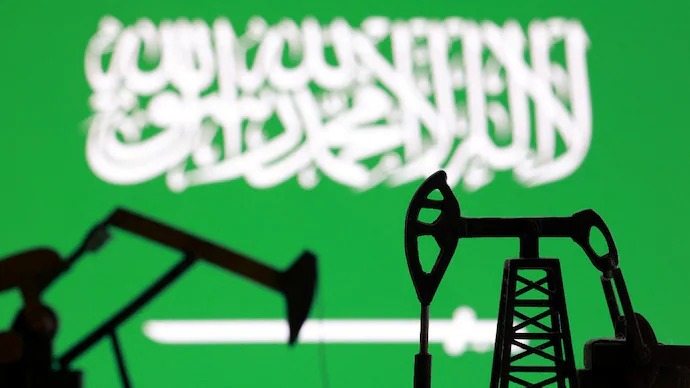
Saudi Arabia is facing an unusual financial challenge as the ongoing regional conflict puts pressure on government finances, oil operations, trade routes, and economic plans. The kingdom is now exploring fresh borrowing of at least $8 billion, according to people familiar with the matter.
The possible loan comes at a sensitive moment for Riyadh. Saudi Arabia has spent years building a broader economy that can eventually depend less heavily on crude oil revenue. That transformation requires enormous spending, while the war involving Iran has introduced another layer of uncertainty for government finances.
The National Debt Management Center, which operates under Saudi Arabia’s Finance Ministry, has reportedly approached banks to understand their interest in a potential loan. The discussions remain preliminary, meaning the borrowing could still change or might not happen at all.
Why Saudi Arabia Needs Fresh Borrowing
At first glance, borrowing billions of dollars may appear surprising for one of the world’s biggest oil-producing economies. Saudi Arabia has significant energy resources and maintains access to international financial markets.
However, oil wealth does not automatically protect government budgets from sudden economic shocks. Riyadh is currently dealing with weaker oil-sector activity, higher costs, disrupted transportation, and continued spending requirements connected with its long-term economic transformation.
The kingdom recorded a second-quarter budget deficit of 34.3 billion Saudi riyals, equivalent to approximately $9.1 billion. That figure highlights how quickly financial pressure can increase when major economic activity is disrupted.
The potential $8 billion borrowing is therefore not simply about covering one quarter’s deficit. It also reflects a broader strategy of maintaining access to different sources of funding while managing unpredictable economic conditions.
War Creates New Economic Pressure
The conflict with Iran has created problems that extend well beyond military concerns. Shipping movements have been disrupted, supply chains have faced additional pressure, and transportation costs have become more difficult to predict.
The Strait of Hormuz is especially important because it handles a major share of global energy shipments. Any prolonged disruption around the waterway can affect exporters, importers, shipping companies, insurers, and governments across the region.
Saudi Arabia has alternative infrastructure for moving crude toward its western coast. However, disruptions have made those routes more strategically important while also highlighting their capacity limitations.
Attacks on energy-related infrastructure have added another concern. Iran has targeted Saudi energy infrastructure during the conflict, while Iran-backed Houthi forces have threatened shipping in the Red Sea.
For Saudi Arabia, this creates an uncomfortable combination of higher security risks and greater economic uncertainty. The country must continue protecting critical infrastructure while ensuring that oil exports and domestic economic activity remain functional.
Oil Prices Offer Some Relief
There is an important twist in Saudi Arabia’s current financial situation. The same conflict damaging parts of the economy has also helped keep crude prices elevated.
Brent crude has averaged roughly $87 per barrel during 2026, according to the latest reporting. Higher oil prices provide additional revenue and can partially offset some of the financial damage caused by disruptions.
Yet higher crude prices cannot completely solve the kingdom’s problems. Saudi Arabia’s oil sector itself has been affected by the regional conflict and transportation difficulties.
The country’s oil sector contracted by nearly 25% during the second quarter. Overall, the Saudi economy experienced its sharpest contraction since the pandemic during that period.
That combination is particularly important. Higher oil prices normally benefit Saudi Arabia, but lower production and disrupted operations can reduce the amount of oil actually contributing to economic output.
Saudi Arabia’s Oil Sector Faces Pressure
Saudi Arabia remains one of the most important players in the global energy market. Its oil industry is central to government revenue, exports, investment, and international economic influence.
The current situation demonstrates why oil-dependent economies remain vulnerable even when crude prices are strong.
Production, transportation, refining, infrastructure security, and international demand all influence the final economic benefit from higher prices. A rise in crude prices therefore does not automatically translate into stronger government finances.
The second-quarter contraction shows that physical disruptions can outweigh some benefits created by expensive oil.
Saudi Arabia is also attempting to maintain reliable export routes despite instability around the region. Its western coast infrastructure provides an important alternative to routes dependent on the Strait of Hormuz, although moving larger volumes through alternative routes requires sufficient pipeline and terminal capacity.
This has made energy infrastructure a financial as well as strategic priority for Riyadh.
Vision 2030 Adds Spending Needs
Another major factor behind Saudi Arabia’s financing requirements is its ambitious economic diversification programme.
Under Vision 2030, Riyadh has been investing heavily in sectors beyond traditional petroleum. Tourism, infrastructure, technology, entertainment, manufacturing, logistics, and large development projects are all part of the broader transformation.
These projects require substantial capital over many years. Delaying investment can affect growth ambitions, while continuing spending during a period of weaker economic activity can increase pressure on public finances.
That creates a difficult balancing act for policymakers.
Saudi Arabia wants to continue building its future economy while simultaneously responding to immediate geopolitical risks. Fresh borrowing can provide additional flexibility without forcing the government to rely entirely on current revenues.
The proposed loan therefore needs to be viewed within this larger economic transformation rather than only as an emergency response to the war.
Aramco Also Explores Financing
Saudi Arabia’s government is not the only major Saudi entity looking at additional financing.
Saudi Aramco, the state-backed oil giant, is also reportedly discussing possible financing with banks. The discussions involving both sides remain preliminary and do not necessarily mean that final borrowing agreements will be completed.
Still, the parallel discussions are significant because Aramco sits at the center of Saudi Arabia’s energy economy.
Additional financing could give the company more flexibility while dealing with infrastructure risks, market uncertainty, and the changing economics of global oil transportation.
It also demonstrates that current financial pressures are affecting different parts of the Saudi economic system rather than being restricted to the government budget.
What The $8 Billion Loan Means
The possible $8 billion loan should not automatically be interpreted as a sign that Saudi Arabia is facing a financial crisis.
Saudi Arabia remains a wealthy energy-producing country with considerable financial resources and access to international capital markets.
Instead, the proposed borrowing appears to show a preference for financial flexibility during an unusually uncertain period.
Governments often borrow even when they possess substantial reserves because maintaining liquidity can be useful during periods of economic volatility. Borrowing can also allow authorities to spread financing requirements across different years rather than placing the entire burden on current revenues.
For Riyadh, maintaining funding options becomes even more important while major economic diversification projects continue.
Global Markets Are Watching Closely
Saudi Arabia’s financial decisions matter far beyond its borders because the kingdom is a crucial participant in global oil markets.
Any prolonged disruption to Saudi production or exports could affect crude prices, inflation, transportation costs, and energy security in multiple countries.
Current oil-market conditions already remain highly sensitive to developments around the Middle East. Brent crude recently moved above $90 per barrel amid renewed military tensions involving the United States and Iran.
For international investors, Saudi Arabia’s borrowing plans also provide clues about how governments across the Gulf are responding to prolonged uncertainty.
The situation could become more complicated if geopolitical tensions remain elevated for an extended period. Higher oil prices may support revenues, but weaker production, disrupted trade, higher security spending, and expensive infrastructure requirements could continue working in the opposite direction.
The Bigger Financial Picture
Saudi Arabia’s current borrowing plans underline a broader reality about the modern Gulf economy.
Oil remains extremely valuable, but managing an oil-rich economy has become more complicated as governments invest heavily in diversification while dealing with unpredictable geopolitical risks.
The $9.1 billion second-quarter deficit shows the immediate financial pressure. The possible $8 billion loan shows how Riyadh may respond by expanding its financing options.
At the same time, higher crude prices provide an important cushion, preventing the situation from becoming entirely negative for government revenue.
The real challenge will be maintaining economic transformation without allowing temporary geopolitical shocks to derail long-term investment plans.
What Happens Next For Riyadh
The next stage will depend heavily on the development of the regional conflict, oil prices, production levels, shipping conditions, and investor confidence.
If geopolitical tensions ease, transportation networks could gradually normalize and some of the current financial pressure may decline. Higher oil production could also improve economic performance if market conditions remain supportive.
If disruption continues, however, Saudi Arabia may need to rely more heavily on borrowing, reserves, and other financing channels.
The potential $8 billion loan is therefore best understood as a sign of preparation rather than panic. Saudi Arabia is trying to keep its finances flexible while protecting its energy industry and continuing an expensive economic transformation.
The coming months will show whether higher oil revenues can offset the wider economic costs created by war and disrupted trade. For investors and energy markets, Saudi Arabia’s next financial decisions will remain important indicators of how the Gulf’s largest economy is managing an increasingly uncertain environment.
Conclusion:
Saudi Arabia’s move toward fresh borrowing highlights the complicated financial reality facing the kingdom in 2026. The possible $8 billion loan comes alongside a $9.1 billion quarterly deficit, a sharp contraction in the oil sector, disrupted shipping routes, and continued spending on economic diversification. Higher crude prices are providing some protection, but they cannot completely eliminate the impact of conflict and weaker economic activity. Riyadh still has considerable financial strength, but maintaining flexibility has become increasingly important. Follow the latest developments in Saudi Arabia, global oil markets, and Middle East economics to understand how these changes could affect the wider global economy.
Read More :-