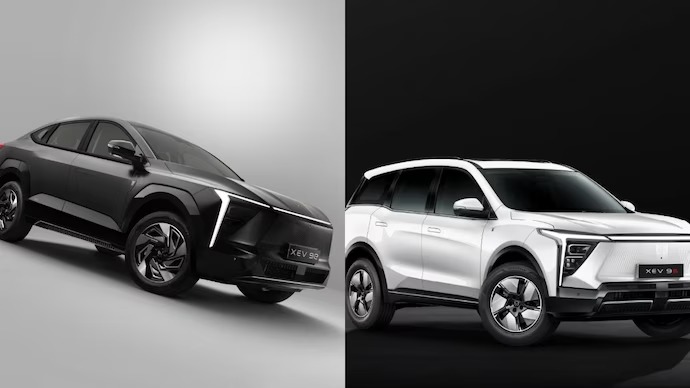
Mahindra has changed the pricing game for its electric SUVs with a new ownership option that could make the XEV 9e and XEV 9S much easier to consider. Under the company’s expanded Battery-as-a-Service programme, the Mahindra XEV 9S now starts at Rs 12.65 lakh, while the XEV 9e gets a starting price of Rs 13.90 lakh, with prices excluding applicable taxes and registration costs.
The interesting part is that these prices do not represent the complete traditional cost of buying an electric SUV. Instead, Mahindra separates the battery expense from the upfront vehicle price and allows customers to finance the battery separately. The battery financing carries an effective usage cost of Rs 3.75 per kilometre, creating a different way to calculate the overall ownership cost.
New Prices Change EV Buying
The biggest attraction of this announcement is clearly the lower starting price. Electric SUVs generally have higher upfront prices because their battery packs form a significant portion of the overall vehicle cost.
Mahindra’s Battery-as-a-Service model attempts to solve that problem by separating the vehicle purchase from the battery financing. This means customers can enter the ownership process by paying considerably less upfront, while the battery-related expense is handled through a separate financing structure.
For buyers comparing electric SUVs with petrol or diesel alternatives, this difference could become important. The initial showroom price is often one of the first numbers customers check before considering financing, monthly payments, insurance, charging expenses and running costs.
With the new scheme, the XEV 9S begins at Rs 12.65 lakh, while the XEV 9e starts from Rs 13.90 lakh. Both models carry the same effective battery usage charge of Rs 3.75 per kilometre under the BaaS structure.
How Battery As Service Works
Battery-as-a-Service, commonly shortened to BaaS, works on a simple principle. Instead of making customers pay the complete battery cost as part of the vehicle purchase, the battery is financed separately through the associated financing arrangement.
This approach reduces the initial amount required to purchase the SUV. However, customers still need to account for the battery-related payment while calculating their regular running expenses.
The Rs 3.75 per kilometre figure becomes particularly important here. It means the effective battery expense is connected with vehicle usage rather than being included entirely in the initial purchase amount.
For someone driving fewer kilometres every month, the running-linked expense could look different from someone covering long distances regularly. Therefore, customers should compare the total monthly cost instead of looking only at the headline ex-showroom figure.
Mahindra had initially introduced this ownership model with the BE 6 SPORTEQ. The company has now expanded the programme across its electric-origin SUV range, including the XEV 9S and XEV 9e. The BaaS option is available across the variants covered under the programme.
XEV 9S Starts At Rs 12.65 Lakh
The XEV 9S is positioned as the more practical choice between the two SUVs. It offers a larger SUV body and three-row practicality, making it particularly relevant for buyers who want an electric vehicle for family use.
Under the new BaaS pricing, the entry-level XEV 9S starts at Rs 12.65 lakh. Higher variants with larger battery options have correspondingly higher vehicle prices under the same ownership structure.
Available battery capacities include 59kWh, 70kWh and 79kWh options depending on the variant. The larger battery versions naturally command higher prices, but the BaaS structure still separates battery financing from the vehicle’s upfront purchase amount.
The XEV 9S uses Mahindra’s INGLO electric platform and follows the company’s newer approach toward dedicated electric SUVs. Its combination of SUV proportions, multiple seating capacity and electric powertrain gives it a different appeal compared with smaller electric cars currently available in India.
The starting price therefore grabs attention, but customers should examine the exact variant, battery capacity and financing terms before deciding which version makes the most financial sense.
XEV 9e Gets Attractive Entry
The XEV 9e takes a more premium and design-focused approach. It is a coupe-style electric SUV with a futuristic cabin and a strong focus on technology.
Under the new Battery-as-a-Service arrangement, its starting price falls to Rs 13.90 lakh. That is considerably lower than the conventional upfront price of the corresponding entry variant when the battery is included.
The XEV 9e is available with 59kWh and 79kWh battery options depending on the selected variant. The larger battery configuration is aimed at customers looking for greater driving range and stronger performance.
The 59kWh version has a claimed MIDC range of more than 500 kilometres, while the 79kWh versions can offer an even higher claimed range. Exact figures vary according to the battery and variant selected.
The SUV also supports fast charging, which is an important consideration for customers planning to use it for longer journeys. Mahindra has positioned the XEV 9e as one of its flagship electric SUVs, so the lower entry price under BaaS could bring the model to a wider group of buyers.
Same Battery Cost Across Models
One detail that makes the new programme easier to understand is the common effective battery usage cost. The XEV 9S and XEV 9e both use the Rs 3.75 per kilometre battery financing figure under the scheme.
The same structure also applies to the BE 6 SPORTEQ, which now starts at Rs 11.45 lakh under BaaS. This means Mahindra has created a broader electric SUV pricing strategy instead of limiting the programme to one particular model.
The lower upfront price can make financing conversations easier for some customers. At the same time, buyers need to remember that the headline price does not include every ownership expense.
Insurance, registration, taxes, financing charges, charging equipment and electricity costs can all influence the final ownership budget. The battery usage component also needs to be considered according to the expected annual driving distance.
This is why the new pricing should be viewed as an alternative purchase structure rather than simply a permanent price reduction on the SUVs.
What Buyers Should Check
The BaaS scheme could be attractive for customers who want a premium electric SUV but are concerned about paying a large amount upfront. Still, the complete financial calculation is more important than the starting price shown in advertisements.
Before booking the vehicle, buyers should check the exact battery option, selected variant, financing tenure and applicable battery-related charges. Monthly driving distance should also be estimated realistically because the Rs 3.75 per kilometre cost is directly connected with usage.
Customers should also compare the total amount payable throughout the financing period. A lower initial payment can sometimes result in a different long-term ownership cost depending on financing conditions and driving patterns.
Another important factor is charging access. A buyer with convenient home charging may have a very different running-cost calculation compared with someone who depends heavily on public charging stations.
For buyers who already understand electric vehicle ownership and want to reduce the initial purchase burden, the scheme could be especially interesting.
Bigger Push For Mahindra EVs
Mahindra’s expanded BaaS programme comes at an important stage for the Indian electric vehicle market. Customers are becoming more aware of range, charging infrastructure and battery costs, while manufacturers are experimenting with different ways to make EV ownership financially easier.
The new structure gives Mahindra another tool to attract buyers who may otherwise hesitate because of high electric SUV prices.
The XEV 9S brings family-focused practicality, while the XEV 9e focuses more strongly on premium styling and technology. Both models now have a much lower entry point when purchased through the BaaS structure.
However, the final decision will depend on individual usage. Someone driving very high monthly kilometres should carefully calculate the battery-linked cost, while a low-mileage user may see the structure differently.
Final Verdict On New Pricing
Mahindra’s decision to extend Battery-as-a-Service to the XEV 9S and XEV 9e makes these electric SUVs look considerably more accessible on paper. The XEV 9S starting at Rs 12.65 lakh and XEV 9e starting at Rs 13.90 lakh create a much lower entry barrier than their conventional battery-inclusive prices.
Still, buyers should not judge the offer only by the initial showroom figure. The Rs 3.75 per kilometre battery cost, financing terms, charging expenses and expected yearly usage all need to be included before making a final decision.
For customers looking for a premium electric SUV with a smaller upfront commitment, Mahindra’s new BaaS option could become a compelling alternative. As electric vehicle ownership models continue evolving, this approach may also influence how other manufacturers structure their future EV pricing.
Read More :- globe-wander.com