Retail inflation in India, which crossed the 6 per cent threshold in October, is expected to remain elevated through November as broad-based pressure on food prices continues, according to the Reserve Bank of India’s latest monthly bulletin. The assessment, contained in the State of the Economy article authored by RBI researchers, has increased expectations of further monetary tightening when the central bank’s Monetary Policy Committee meets in December.
October Inflation Breaches Upper Tolerance Band
Headline consumer price index-based inflation rose to 6.1 per cent year-on-year in October 2026 from 5.5 per cent in September. This marked the first time inflation had moved above the RBI’s upper tolerance limit of 6 per cent since October 2024. The increase was driven primarily by the food and beverages category, which carries a significant weight in the overall index.
Food inflation itself accelerated sharply, reaching levels around 8.9 per cent. The rise was not confined to a few items. Price pressures were visible across cereals, pulses, edible oils and several vegetables, contributing to a broader generalisation of inflation. Core inflation, which excludes food and fuel, also edged higher to 4.5 per cent from 4.3 per cent in the previous month, indicating that underlying price pressures were beginning to spread beyond the more volatile food segment.
Eleven of the twelve major divisions of the consumer price index recorded sequential increases in October. The share of items experiencing inflation above 4 per cent and above 6 per cent also rose, pointing to a wider diffusion of price pressures across the consumption basket.
Persistent Food Price Pressures into November
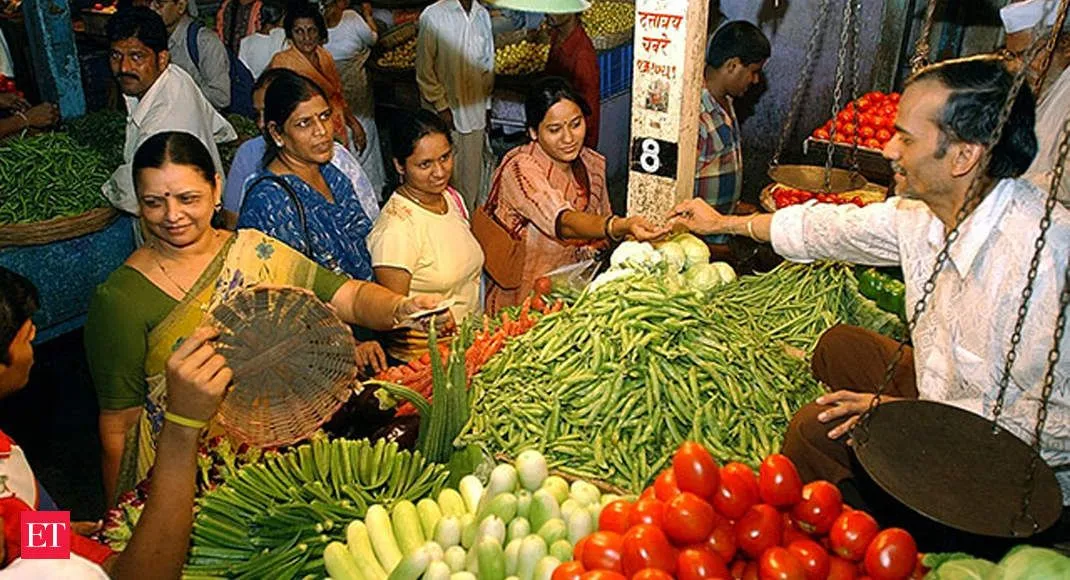
High-frequency data available up to 19 November provided little immediate relief. The RBI bulletin noted continuing broad-based pressure on food prices. Prices of all major cereals and pulses picked up during the month. Edible oil prices registered a broad-based increase, with mustard oil leading the rise.
Vegetable prices presented a more mixed picture. Onion prices recorded a relatively moderate increase, tomato prices saw a sharp correction, while potato prices moved higher. Despite the correction in tomatoes, overall food inflation remained elevated enough to keep headline inflation under pressure. Onion prices, even with a moderate monthly rise, continued to trade at levels significantly higher than a year earlier.
These trends suggest that the elevated food inflation observed in October is likely to persist into November, keeping the overall retail inflation print elevated. The persistence of food price pressures is particularly significant because food and beverages account for a large share of the consumer price index and have a direct impact on household budgets, especially for lower and middle-income groups.
Policy Context and December Outlook
The RBI had already raised the policy repo rate by 25 basis points to 5.50 per cent in its October policy review, marking the first rate increase in nearly four years. At that time, the central bank shifted its stance to calibrated tightening, signalling that future decisions would depend on the evolving inflation and growth trajectory.
The latest bulletin’s findings on November food prices have strengthened market expectations of another possible rate hike in the December policy review. Sustained inflation above the upper tolerance band, combined with evidence of broadening price pressures, is likely to feature prominently in the Monetary Policy Committee’s deliberations.
At the same time, the RBI researchers noted that India’s domestic growth drivers and overall macroeconomic fundamentals continue to act as useful buffers against a challenging global environment. This balanced assessment underscores that while inflation remains a concern, the broader economy retains underlying resilience.
Broader Implications of Generalised Inflation
The shift toward more generalised inflation is an important development. When price increases are confined largely to food or fuel, they are often viewed as temporary and supply-driven. When a larger number of items and categories begin to show elevated inflation, the risk of second-round effects and more entrenched inflation expectations rises. The increase in the share of items with inflation above both 4 per cent and 6 per cent in October points in this direction.
Rural inflation has been running higher than urban inflation, reflecting the greater weight of food in rural consumption baskets. This pattern adds another layer of complexity for policymakers, as elevated rural prices can affect both household welfare and wage dynamics.
Wholesale price inflation has also remained elevated, rising further in October. High input costs at the wholesale level can eventually feed into retail prices if demand conditions allow producers to pass on higher costs.
Looking Ahead
The coming weeks will provide more complete data on November inflation, which will be a key input for the December policy meeting. For now, the high-frequency indicators highlighted in the RBI bulletin suggest that food price pressures have not yet eased sufficiently to bring headline inflation comfortably back within the tolerance band.
The central bank’s focus remains on ensuring that inflation returns to the target range in a durable manner while supporting sustainable growth. The persistence of elevated food prices in November has made the near-term inflation outlook more challenging and has raised the likelihood that monetary policy will remain in tightening mode for some time.
Households continue to face higher costs for essential food items, even as the broader economy shows resilience. For policymakers, the task is to balance the need for price stability with the imperative of maintaining growth momentum. The latest RBI bulletin makes clear that food inflation remains the dominant near-term challenge, and its trajectory will heavily influence the path of monetary policy in the months ahead.
Read more – thewordstarter.com