Protein is an essential nutrient that supports muscle repair, immune function, hormone production, and overall tissue health. In recent years, higher-protein eating patterns have gained widespread attention for their potential roles in weight management, muscle preservation, and healthy aging. Understanding what constitutes a high-protein diet, its evidence-based benefits and limitations, and the most practical food sources helps individuals make informed choices that fit everyday life.
A high-protein approach typically means consuming more protein than the basic Recommended Dietary Allowance of about 0.8 grams per kilogram of body weight per day. Many current recommendations for general health, active people, and older adults fall in the range of 1.2 to 1.6 grams per kilogram. Athletes or those focused on building or retaining muscle may aim higher, often between 1.6 and 2.2 grams per kilogram, particularly during periods of calorie restriction. Exact needs vary with age, activity level, health status, and goals.
Key Benefits Supported by Evidence
One of the most consistent advantages of higher protein intake is its effect on satiety. Protein-rich meals tend to promote feelings of fullness more effectively than meals dominated by carbohydrates or fats. This can make it easier to manage overall calorie intake, which supports weight control or loss when combined with a balanced diet.
Higher protein also helps preserve lean muscle mass. During weight loss, the body can break down both fat and muscle. Adequate protein, especially when paired with resistance exercise, reduces muscle loss and supports better body composition outcomes. For older adults, who naturally experience gradual declines in muscle mass and strength, protein intakes in the higher recommended ranges are particularly valuable for maintaining function and independence.
Protein contributes to the thermic effect of food, meaning the body uses more energy to digest and process it compared with other macronutrients. While this effect is modest, it adds a small metabolic advantage. In combination with strength training, sufficient protein provides the amino acids needed for muscle protein synthesis and recovery.
Understanding Potential Risks and Safety Considerations
For most healthy adults, moderately elevated protein intake appears safe. Multiple analyses of studies in people without kidney disease have found no evidence that higher protein levels harm kidney function. The body adapts by increasing the excretion of nitrogen waste products, provided overall health is good and hydration is adequate.
The primary caution applies to individuals with existing kidney disease. In these cases, protein intake often needs to be moderated under medical supervision, as impaired kidneys may struggle to process the additional waste. People with other chronic conditions should also seek personalized guidance before making significant dietary changes.
The source of protein matters as much as the quantity. Diets heavy in processed meats or large amounts of fatty red meat have been associated with higher risks of certain chronic diseases. In contrast, patterns that emphasize lean poultry, fish, eggs, dairy, legumes, and other plant proteins tend to align with better long-term health markers. Replacing some animal protein with plant sources has been linked in observational research to favorable outcomes for heart health.
Very high intakes sustained over long periods without a clear need may displace other important nutrients if the overall diet becomes unbalanced. Staying hydrated is advisable, as processing protein increases the demand for water to excrete urea.
Best Food Sources for Everyday Eating
A practical high-protein diet draws from a variety of accessible foods rather than relying solely on supplements or extreme measures.
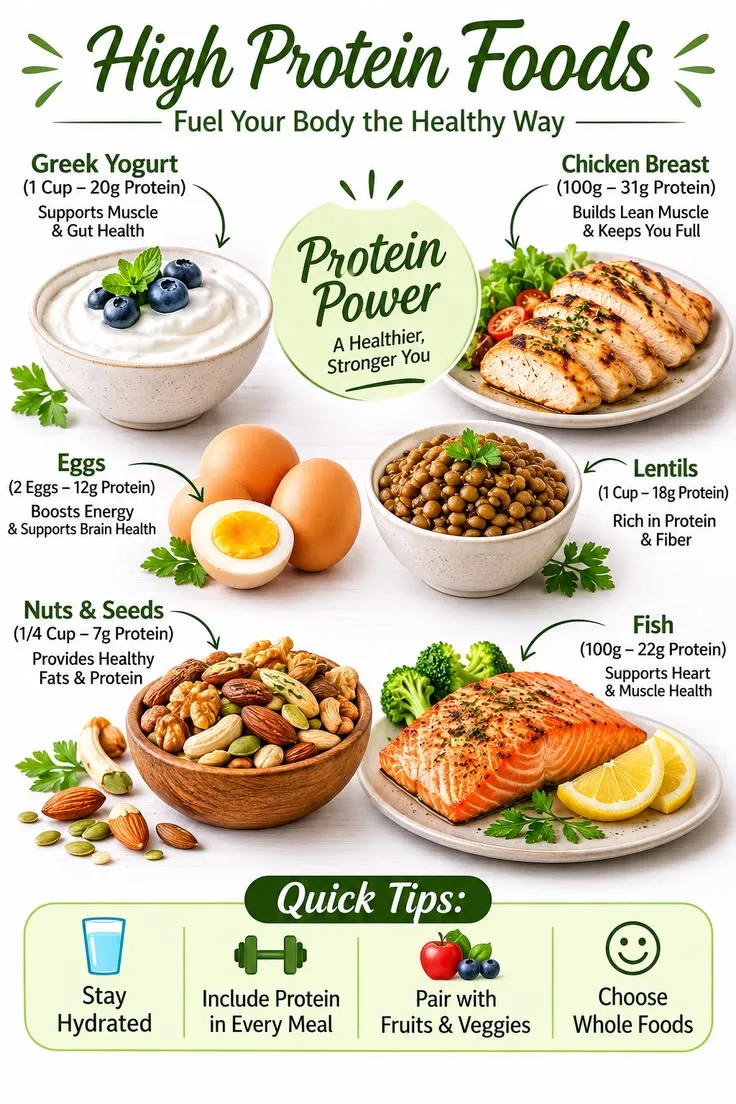
Among animal sources, skinless chicken breast and turkey provide lean, versatile protein—roughly 25 to 30 grams in a typical 3-ounce cooked portion. Fish such as salmon and tuna deliver high-quality protein along with beneficial omega-3 fatty acids. Eggs offer about 6 grams each and pair easily with many meals. Dairy options like plain Greek yogurt and cottage cheese supply substantial protein in convenient forms, often 15 grams or more per serving, along with calcium.
Plant-based sources are equally valuable and bring additional fiber, vitamins, and minerals. Lentils, chickpeas, black beans, and other legumes typically provide 7 to 9 grams of protein per half-cup cooked serving. Tofu, tempeh, and edamame are particularly protein-dense soy foods. Quinoa stands out among grains for its protein content and complete amino acid profile. Nuts, seeds, and nut butters contribute smaller but useful amounts along with healthy fats.
Combining different plant proteins across the day helps ensure a full range of amino acids. Many people successfully meet higher targets with mixed diets that include both animal and plant foods, or with well-planned plant-focused patterns.
Practical Ways to Incorporate More Protein
Spreading protein across meals—aiming for roughly 20 to 40 grams at each main meal—supports better utilization than concentrating large amounts in one sitting. Simple swaps make a difference: choosing Greek yogurt over regular yogurt, adding beans or lentils to soups and salads, including eggs at breakfast, or selecting lean proteins at lunch and dinner.
Focusing on whole or minimally processed foods maximizes nutritional value. Reading labels on packaged high-protein products helps avoid excess sodium, added sugars, or unnecessary additives. For those with higher needs due to training or age, consistent daily intake matters more than perfect precision at every meal.
Balancing Protein Within an Overall Healthy Pattern
Protein works best as part of a varied diet that also includes plenty of vegetables, fruits, whole grains, and healthy fats. Extreme restriction of other food groups is unnecessary and can create nutrient gaps. Individual factors such as total calorie needs, activity level, and any medical conditions should guide specific targets.
Consulting a registered dietitian or healthcare provider is wise when managing health conditions, significant weight changes, or specialized goals. Blood work and personal health history provide context that general guidelines cannot.
High-protein eating patterns offer clear advantages for satiety, muscle maintenance, and metabolic support when approached thoughtfully. By selecting quality sources, matching intake to personal needs, and maintaining overall dietary balance, most people can incorporate higher protein levels safely and effectively as part of everyday healthy living. The emphasis remains on sustainable habits rather than short-term extremes, allowing the benefits of protein to support long-term well-being.
Read more – flowofnames.com