The Akhil Bharatiya Vidyarthi Parishad has retained the president’s post of the Panjab University Campus Students’ Council for a second consecutive year. The result is significant on its own terms. It is the first time the organisation has won the top post back-to-back in the university’s long history of student elections. Yet the larger political interest lies less in the margin of victory and more in the arithmetic that produced it, and in what that arithmetic may signal for Punjab’s approaching assembly contest.
A Second Consecutive Victory
ABVP candidate Ankit Bidhan secured the presidency, defeating the candidate of the Aam Aadmi Party-linked student body by a margin of more than five hundred votes. Other contenders, including the Congress-backed NSUI, also remained in the fray. Turnout was substantial by campus standards, and the contest was closely watched across the region.
Last year the ABVP had broken a decades-long pattern by winning the top post for the first time in living memory at the university. Retaining it this year converts that breakthrough into a sustained presence rather than a one-off result. For an organisation that had long struggled to convert organisational energy into electoral success on this particular campus, the consecutive wins represent a clear shift in student preference, at least within the boundaries of Panjab University.
The Akali Student Wing’s Role
The more consequential development was the last-minute support extended by the Student Organisation of India, the student wing of the Shiromani Akali Dal. The SOI has traditionally contested these elections independently. This time, after its own presidential nominee encountered technical difficulties with nomination, the organisation threw its weight behind the ABVP candidate.
That decision immediately altered the political reading of the result. What might otherwise have been interpreted as a purely campus verdict acquired the colour of a limited, informal understanding between the student wings of two parties that were once close allies and later bitter opponents. Senior BJP functionaries publicly noted the SOI’s support, treating it as evidence of a broader opening.
Historical Context of the Alliance Question
The BJP and the Shiromani Akali Dal shared power in Punjab for long stretches before their relationship collapsed in 2020 over the farm legislation. The rupture was deep, involving both organisational separation and a sharp public estrangement. In the years since, both parties have navigated the state’s fragmented politics largely on their own, with limited success in expanding beyond their respective core bases.
With the 2027 assembly elections approaching, speculation about a possible thaw has surfaced periodically. Meetings between leaders, statements by secondary figures, and now a visible campus-level accommodation have kept the question alive. The Panjab University result has given that speculation fresh material. A student-wing understanding does not equal a formal electoral alliance, yet in a state where symbolism travels quickly, it is not easily dismissed either.
Limits of the Campus Signal
Caution remains necessary. Student elections at Panjab University have long been treated as a barometer of youth sentiment in the region, but the historical record does not show a consistent ability to predict assembly outcomes. Campus contests are shaped by local issues, candidate appeal, organisational machinery on the ground, and the specific composition of the student body. Assembly elections are fought on a far wider canvas of agrarian distress, governance performance, community equations and leadership credibility.
Moreover, official BJP messaging at the state level has continued to emphasise that the party intends to contest seats on its own strength. The gap between celebratory statements about the university result and the formal line on alliances illustrates the careful calibration still under way. Optics on campus and organisational decisions for a statewide campaign do not always move in lockstep.
What the University Itself Represents
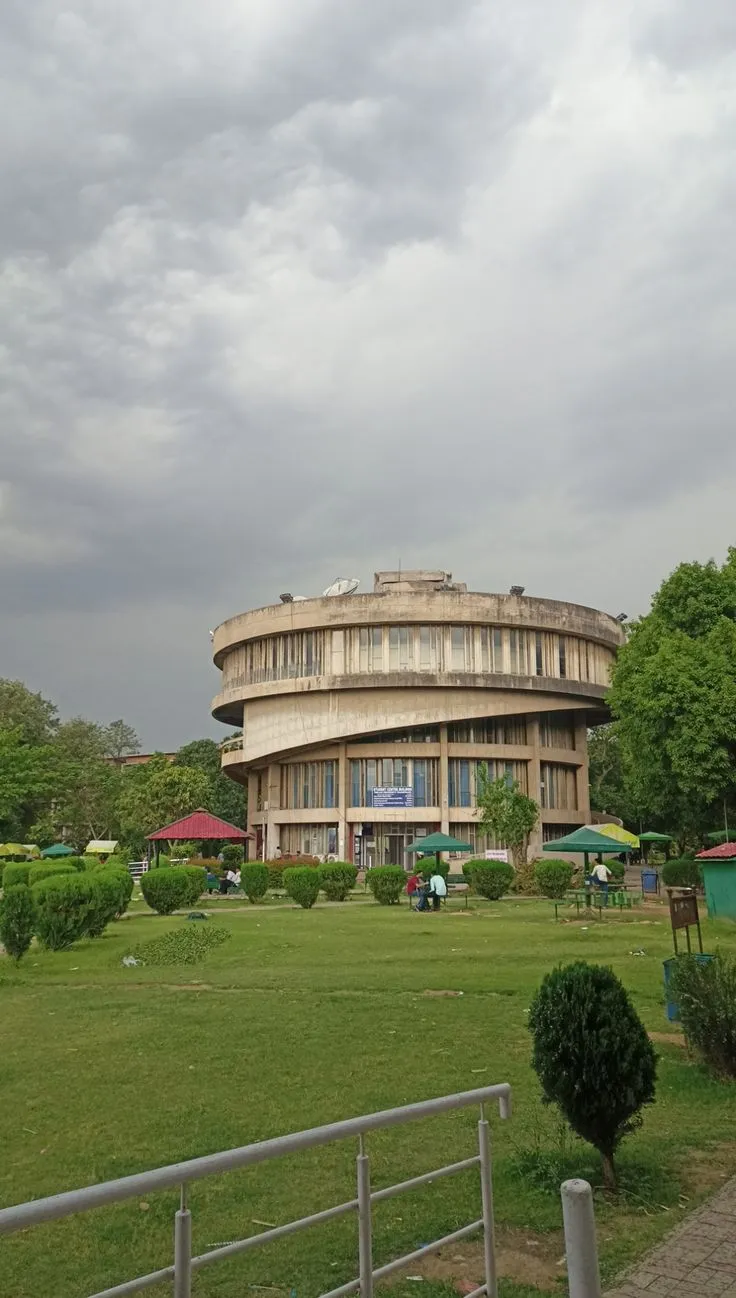
Panjab University occupies a distinctive place in the region’s political imagination. Founded well over a century ago and carrying the layered history of the undivided Punjab, the institution has long been a site where questions of autonomy, identity and external interference are felt with particular intensity. Students and teachers alike have often treated the university as a space that should remain resistant to distant diktats, whether administrative or political.
That institutional temperament mirrors a broader current in Punjabi political culture: a fierce local pride combined with wariness toward arrangements that appear imposed from outside. Any political force seeking to expand in the state must eventually negotiate with that sensibility. The ABVP’s ability to win consecutive presidential contests suggests it has found ways to speak to at least a section of the campus electorate on issues that matter locally. Whether that language can travel beyond the university gates is a different and more difficult test.
Implications for the Road to 2027
The immediate political utility of the result is clear enough. For the BJP it provides a talking point about youth support and organisational presence in a state where the party has historically struggled to put down deep roots. For those within both the BJP and the Akali Dal who favour a renewed understanding, the SOI’s support offers a small but visible precedent. For rival parties, the outcome is a reminder that student politics remains competitive and that no single force can take the youth vote for granted.
Yet the larger questions remain open. Will the campus accommodation remain an isolated episode or evolve into something more structured? Can either party convert student-level momentum into votes in rural and semi-urban constituencies where assembly elections are decided? And how will the distinctive political culture of Punjab, with its emphasis on regional pride and resistance to external direction, shape any future arrangement?
The Panjab University result does not answer these questions. It does, however, sharpen them. In a state heading toward a closely watched election, even a student council contest can become a stage on which larger ambitions and anxieties are briefly visible. The ABVP’s second consecutive victory, and the Akali student wing’s role in it, have ensured that this particular stage is now part of the broader political conversation.
Read more – atechsslaash.com , BestMenuHub.com