The death toll from the devastating flash floods in Nepal rose to 987 on Tuesday as security forces recovered more bodies from multiple districts. Authorities simultaneously issued fresh flood alerts for several areas across the eastern, central and western parts of the country, urging residents living near rivers to remain vigilant and take immediate precautionary measures.
Rising Casualties and Ongoing Recovery
According to the National Disaster Risk Reduction and Management Authority, the confirmed death toll reached 987 following the recovery of additional bodies. The highest numbers were reported from Chitwan with 321, followed by Nawalparasi East with 216, Nawalparasi West with 170 and Nuwakot with 95. Other districts also recorded significant losses: Gorkha 65, Dhading 55, Tanahun 38 and Rasuwa 27.
The flash floods have affected eight districts in total. Of the 279 people reported injured, 168 have been discharged from hospitals after receiving treatment. Search and recovery operations continue under difficult conditions, with security personnel, including the Nepal Army, working across the impacted zones.
Authorities estimate that 3,916 people remain unaccounted for. This figure includes 583 foreign nationals from more than 30 countries. Among the missing are also security personnel, customs and immigration staff, local guides and workers from hydropower project sites. The large number of missing persons underscores the scale and suddenness of the disaster.
Fresh Flood Alerts Issued
On Tuesday, Nepalese authorities issued a new warning about the risk of further flooding in several districts spanning the eastern, central and western regions. The National Disaster Risk Reduction and Management Authority specifically highlighted a high possibility of flash floods in Nuwakot and Rasuwa, where water flow in smaller rivers and streams is expected to rise.
People living near riverbanks have been advised to stay alert, avoid low-lying areas and move to safer locations if necessary. The alerts come as water levels continue to fluctuate and as rescue teams navigate challenging terrain marked by mud, debris and damaged infrastructure.
Scale of Rescue and Relief Efforts
More than 11,000 people have been rescued so far. Over 22,000 security personnel have been mobilised for search, rescue and relief operations. Helicopter sorties have played a critical role, with the Nepal Army conducting hundreds of flights to evacuate people and deliver supplies. Private sector flights have also supported the effort from Kathmandu.
Relief materials continue to be transported by air and road to the worst-hit districts, including Rasuwa and Nuwakot. Ground teams face obstacles such as destroyed roads, washed-away bridges and communication disruptions. Continuous rain in some areas has further complicated access and slowed the pace of recovery.
Impact Across Districts and Communities
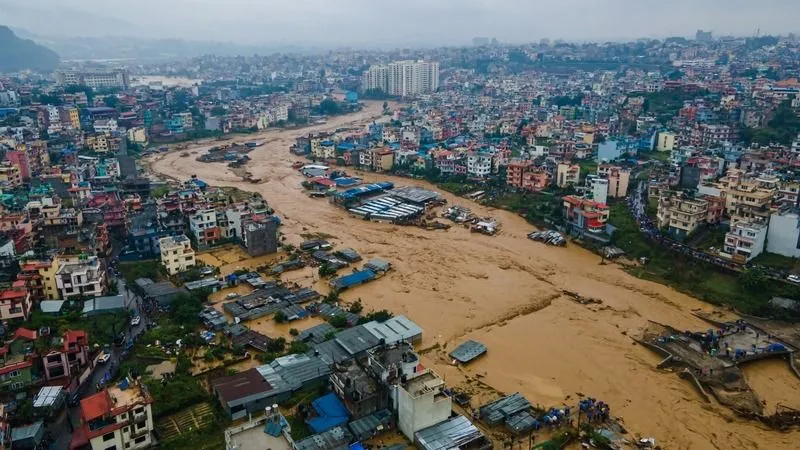
The floods originated from a catastrophic event involving glacial collapse and debris flows near the Nepal-China border, sending a surge of water and mud downstream through the river systems. The force of the flood carried debris and people over long distances, which explains why recovery of bodies has been reported far from the initial impact zone.
Communities along the river corridors have suffered extensive damage to homes, farmland and local infrastructure. Hydropower project sites were particularly hard hit, with many workers still unaccounted for in tunnels and construction areas. Identification of recovered bodies remains a slow process, with a large number still awaiting formal recognition and handover to families.
Challenges Facing Responders
Rescue teams are operating under severe constraints. Thick mud in many locations makes helicopter landings difficult. Specialised equipment, body bags and additional aviation assets remain in high demand. Weather conditions continue to pose risks both to survivors still stranded and to the personnel attempting to reach them.
Authorities have stressed the need for caution among both residents and responders. The combination of rising water levels in certain rivers and the presence of unstable debris creates the possibility of secondary flooding or landslides.
Broader Context and International Dimension
The disaster has drawn international attention because of the significant number of foreign nationals among the missing. Families and embassies from multiple countries are closely following the recovery efforts. Neighbouring India has also reported the recovery of bodies from rivers flowing out of Nepal, believed to be linked to the same flood event.
Within Nepal, the focus remains on locating the missing, providing medical care to the injured, and delivering essential supplies to displaced communities. Coordination among the National Disaster Risk Reduction and Management Authority, the security forces and local administrations continues to guide the response.
Immediate Priorities
As the death toll approaches 1,000 and thousands remain missing, the immediate priorities are clear. Search operations must continue despite the hazards. Fresh alerts require rapid dissemination and community compliance. Relief supplies need to reach isolated settlements. Identification and dignified handling of recovered bodies remain essential for grieving families.
The coming days will determine how many of the missing can still be located and how effectively secondary flood risks can be managed. For the districts already devastated, the process of recovery and rebuilding will be long. For now, the emphasis stays on saving lives, supporting survivors and preventing further loss in a landscape still marked by unstable rivers and rising waters.
Read more – themenuspark.com , scorematchup.com