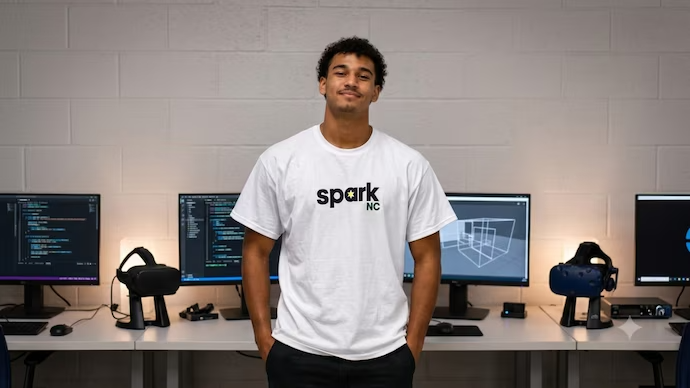
A high school student’s interest in virtual reality is now becoming something much bigger than a personal technology project. Lennox French, a senior at Lexington Senior High School in North Carolina, has been selected to develop a virtual reality learning unit that could eventually be experienced by students across the state.
The project stands out because the student is not simply learning how virtual reality works. He is helping create the learning experience itself. His project, called “Creating Digital Spaces in VR,” is being developed for SparkNC’s statewide learning platform and is expected to launch in 2027.
The idea shows how virtual reality education is gradually moving beyond demonstrations and entertainment. Instead, students are getting opportunities to design digital environments, experiment with technology, and create projects that could eventually be used by other learners.
A Student Project Gets Bigger
French’s journey began at the SparkNC Lab inside Lexington Senior High School. The programme gives students opportunities to explore areas connected with technology, including coding, cybersecurity, game development and other digital skills.
French became interested in virtual reality and game development several years ago. That interest eventually developed into an idea for creating digital spaces where people could interact, explore and learn.
His first version was created as a virtual reality Spark Lab project. It gave him a practical way to understand how immersive environments could be designed from the ground up.
The concept did not remain limited to his school environment. It eventually attracted attention from the people involved with SparkNC, leading to an opportunity that goes well beyond a normal classroom assignment.
Now, French is expected to help transform the original concept into a structured learning unit that other students can use.
What Makes The VR Unit Different
The most interesting part of the project is that students will not simply put on a headset and watch something happen around them.
The planned learning experience is expected to involve creating virtual spaces using Unity, experiencing those spaces through VR, and sharing digital creations with other students.
That makes the project more hands-on than many traditional technology lessons.
Students can potentially learn about digital design while also understanding how virtual environments are planned and constructed. They can experiment with spaces, make changes, identify problems and see how individual design decisions affect the finished environment.
This kind of approach can also introduce students to skills that are useful beyond school. Game development, software creation, digital design and interactive technology all require students to think creatively while solving technical problems.
The project therefore connects classroom learning with practical technology work.
Why Virtual Reality Matters
Virtual reality has been discussed in education for years, but access and implementation remain important challenges.
A textbook can explain how a place, machine or environment works. A normal computer screen can display images and videos. Virtual reality adds another layer by allowing learners to experience a computer-generated environment more directly.
That difference can be useful when students need to understand spaces, movement, design or interaction.
However, simply owning VR equipment does not automatically create better education. The quality of the learning experience still depends on how the technology is used.
French’s project is interesting for exactly that reason. The focus is not only on the headset or the visual effects. It is about teaching students how to create something inside a virtual environment.
That shifts the role of technology from something students consume into something they actively build.
From Technology User To Creator
One of the strongest ideas behind this project is the change from technology consumer to technology creator.
Students already spend significant amounts of time interacting with digital platforms, games, apps and online services. But understanding how those products are actually created requires a completely different set of skills.
Building a virtual environment means thinking about structure, design, software, interaction and user experience.
French’s project gives students a chance to explore those areas through a practical activity rather than learning only through theoretical explanations.
This is also closely connected with SparkNC’s broader approach. Its platform provides on-demand learning experiences in high-tech areas, allowing learners to work independently or collaborate with others. The organisation says these experiences can also help students develop skills such as adaptability, communication and personal responsibility.
The VR unit fits naturally into that model because students can learn while creating.
A First For The SparkNC Programme
French’s selection is also significant for another reason.
He is expected to become the first student in SparkNC’s history to create, design and implement a learning unit for its statewide platform.
That means his work will not simply disappear after a school presentation or end with a grade.
Instead, the project is being developed with the possibility of reaching students beyond his own school.
The North Carolina Department of Public Instruction has approved the project after reviewing its alignment with state computer science standards. The approval means the unit can meet SparkNC requirements for aggregation toward course credit.
That gives the project an academic purpose alongside its technology focus.
It also demonstrates what can happen when schools give students enough freedom to explore their own interests.
Building A Classroom Inside VR
The concept of a virtual classroom can sound complicated, but the basic idea is surprisingly straightforward.
A student starts with an empty digital space and gradually turns it into an environment that people can enter and explore.
French has described the process as something that develops step by step. A basic floor can eventually become walls, objects and a complete virtual environment.
That process teaches something important about digital creation.
Large technology projects rarely appear fully finished at the beginning. Designers usually start with simple elements, test them, make changes and continue improving the experience.
For students, this can make technology feel less mysterious.
Instead of seeing software as something created only by professional developers, they can understand that digital products are built through individual decisions, experimentation and repeated problem-solving.
Other Students Could Use His Work
The biggest change for French’s project will happen when it moves from an individual school project into a statewide learning experience.
Students participating through SparkNC will eventually be able to explore the unit as part of their own technology learning. The planned statewide launch is expected in 2027.
This creates an unusual situation where a student becomes part of the process of designing what other students will learn.
It also gives French a different type of experience than a normal classroom assignment.
He will have to think about how beginners understand virtual reality, how activities should be organised, what students should accomplish and how the experience can remain engaging while still meeting educational requirements.
The development process will involve working with educators, technology companies, SparkNC representatives and other stakeholders.
That collaboration could make the final learning unit more structured and useful for students with different levels of technical experience.
What This Could Mean For Schools
The project points toward a broader change happening in technology education.
Schools are increasingly looking for ways to expose students to emerging technologies before they enter college or the workforce.
A student who gets early experience with virtual reality, programming or digital design may better understand whether those areas interest them as a future career.
SparkNC’s network has expanded across North Carolina, with more than thirty labs operating across school districts according to recent local reporting. The programme’s model is designed to give students opportunities to explore technology and build skills connected with future careers.
Projects like French’s can make that approach more meaningful because students are not only completing predefined exercises.
They are also getting opportunities to develop original ideas.
The Bigger Lesson Behind The Project
There is a simple lesson behind this virtual reality story.
Students do not always need to wait until college or a professional job before creating meaningful technology.
With the right resources, guidance and freedom, a high school project can develop into something that reaches a much wider audience.
French’s VR project began with an interest in virtual reality and game development. It has now moved toward becoming a structured educational experience for other students.
That progression is important because it changes how technology education can work.
Instead of asking students only to understand existing tools, schools can encourage them to build new ones.
Virtual reality may eventually become a much more common part of education, but projects like this show that the technology itself is only one part of the equation. The bigger opportunity comes when students are given the chance to imagine something, build it, test it and eventually share it with others.
A New Direction For Digital Learning
Lennox French’s project offers a practical example of how virtual reality in education can move from an interesting experiment toward a structured learning opportunity. His work is expected to give other students the chance to explore digital spaces while developing technical and creative skills at the same time.
More importantly, the project shows what student-led innovation can look like when schools provide the right support. A high school idea can become a resource for learners far beyond its original classroom.
As schools continue exploring immersive technology, the strongest projects may not simply be the ones with the most impressive graphics. They may be the ones that help students create, collaborate and understand how technology actually works.
For students interested in VR, coding and digital design, this development offers a useful reminder that classroom ideas can have real-world potential.
Read More :- RedTeaDetoxCleanse.com