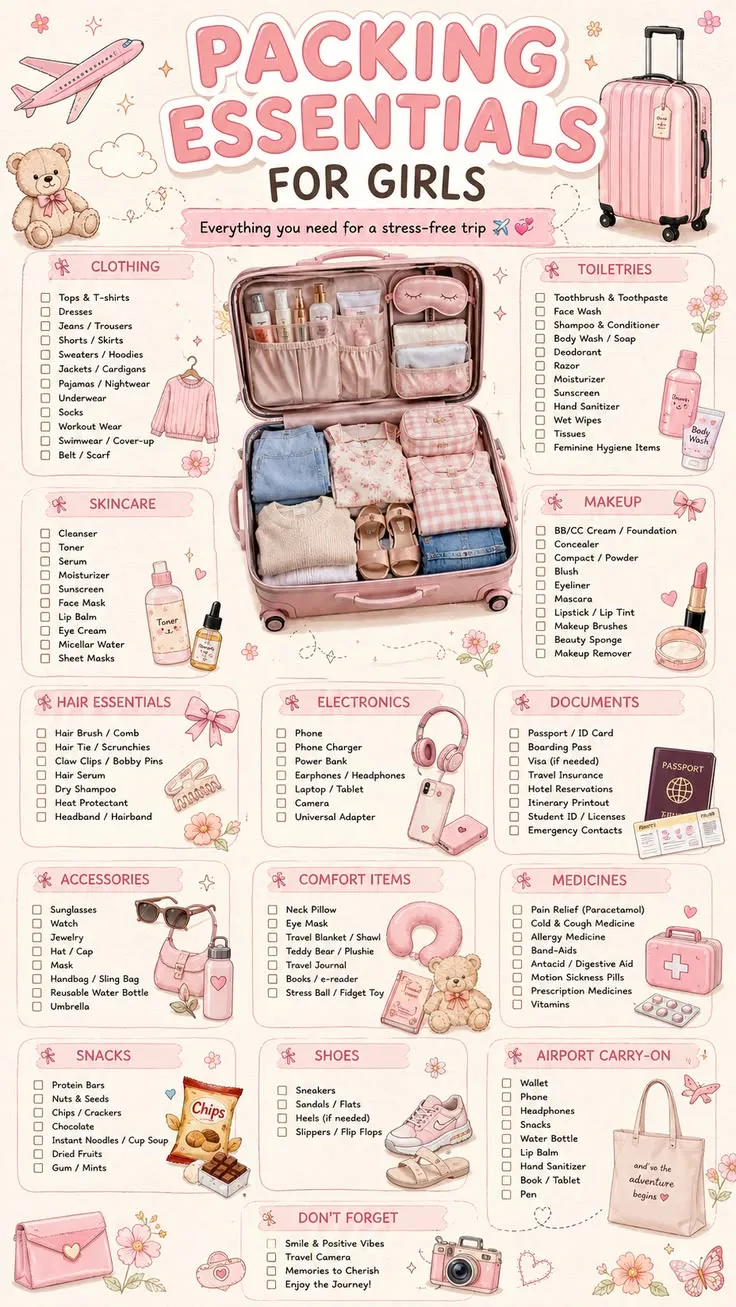
Packing well is one of the most practical skills a traveler can develop. A thoughtful selection of essentials reduces stress, prevents last-minute purchases, and allows greater freedom to enjoy the journey. For women, the process often involves balancing versatility, comfort, personal care needs, and safety considerations. This guide outlines core categories and practical choices that work across city breaks, longer trips, and varied climates, with an emphasis on items that serve multiple purposes and keep luggage manageable.
Documents, Money, and Important Papers
The most critical items are those that enable travel itself. A valid passport (with necessary visas), a secondary form of photo identification, and printed or digital copies of key documents should be kept secure and accessible. Store digital copies in a reliable cloud location or email them to yourself. Physical photocopies of the passport’s main page can be useful if the original is misplaced.
Payment methods deserve equal attention. Carry at least one credit or debit card that works internationally, plus a small amount of local currency or widely accepted notes for immediate needs upon arrival. Notify banks of travel dates to avoid declined transactions. Keep cards and cash in separate places so that loss of one does not eliminate all access to funds.
Travel insurance details, emergency contacts, and any required medical information should also be readily available.
Clothing: Prioritize Versatility and Layers
Clothing choices determine both comfort and luggage weight. The most effective approach is a small capsule wardrobe built around coordinating colors and fabrics that layer easily. Neutral bases with one or two accent pieces allow multiple outfits from fewer items.
Tops that mix and match with a limited number of bottoms form the foundation. Lightweight, quick-drying fabrics are preferable for most destinations because they pack small and wash easily. A versatile dress or long skirt can serve for both daytime exploration and evening occasions while offering coverage when cultural norms require it. A light sweater, cardigan, or packable jacket provides warmth for planes, air-conditioned spaces, or cooler evenings.
Underwear and socks should be sufficient for several days, with the expectation of washing items during longer trips. A comfortable sleep outfit and one set of active or casual wear expand options without adding bulk. Swimwear is worth including even for non-beach trips if the accommodation has a pool or the itinerary might include water activities.
Shoes are often the heaviest items, so limit them. A reliable pair of walking shoes or sneakers covers most daily needs. One more polished or comfortable alternative can handle evenings or different terrain. If space allows, lightweight sandals or foldable flats add flexibility.
Personal Care and Toiletries
Travel-sized toiletries keep weight down and meet airline liquid restrictions when carrying on. A basic kit typically includes toothpaste and toothbrush, a multi-purpose cleanser or soap, moisturizer, deodorant, sunscreen, and any essential medications. Hair care can be simplified with smaller bottles or solid bars. Menstrual products appropriate to personal preference and trip length should be packed, as preferred brands may not be available everywhere.
A small first-aid selection—pain relievers, blister treatment, antiseptic, and any personal prescriptions—is valuable. Keep prescription medications in original containers and carry a copy of the prescription when possible. Lip balm, hand cream, and a compact mirror or basic grooming tools round out daily comfort items.
Electronics and Practical Tools
A charged phone is the modern traveler’s most useful tool for navigation, communication, and information. Bring the appropriate charging cable and consider a portable power bank for long days. A universal adapter is essential for international trips. If using multiple devices, label cables or use a small organizer to avoid tangles.
Other practical items include a reusable water bottle (empty through security), a compact day bag or crossbody for daily use, and a lightweight scarf that can serve as a cover, blanket, or modest layer. Packing cubes or compression bags help organize clothing and separate clean items from used ones.
Safety and Security Considerations
A bag with anti-theft features—secure zippers, cut-resistant straps, or RFID-blocking pockets—offers peace of mind in crowded areas. Keep valuables distributed rather than concentrated in one place. A simple doorstop or portable lock can add security in certain accommodations. Awareness of local conditions and basic personal safety practices remain more important than any single product.
Adapting the List to the Trip
Climate and itinerary shape final choices. Hot destinations favor breathable fabrics and sun protection. Cold or variable weather requires better layering and a warmer outer piece. Business travel may need one polished outfit. Adventure or outdoor-focused trips call for sturdy footwear and weather-appropriate activewear.
Length of stay influences quantity rather than categories. Longer trips benefit from laundry planning so that fewer garments suffice. Checking airline baggage allowances and the specific requirements of the destination prevents surprises.
Packing Strategy and Final Checks
Lay out everything before placing it in the bag. This reveals duplicates and unnecessary items. Roll soft clothing to save space and reduce wrinkles, or use packing cubes for organization. Keep essentials needed in transit—medications, a change of clothes, valuables, and toiletries—in a personal item or carry-on.
Before leaving, confirm that documents, medications, chargers, and any destination-specific items are packed. A quick mental walk-through of a typical travel day often surfaces forgotten necessities.
Traveling with Confidence
Effective packing is less about carrying every possible item and more about selecting reliable, versatile pieces that support comfort, safety, and readiness for varied situations. Women travelers who focus on documents and money, a coordinated clothing system, essential personal care, practical electronics, and basic security measures create a foundation that works for most journeys.
The goal is freedom of movement and peace of mind. A well-edited bag allows attention to stay on experiences rather than logistics. With thoughtful preparation and a focus on multi-use essentials, packing becomes a straightforward step that enhances rather than complicates the journey.
Read more – thewhipp.com