Travelling for the first time is an exciting experience filled with new places, cultures, and unforgettable memories. Whether you are planning a domestic vacation or your first international adventure, proper preparation can make the journey smooth and enjoyable. However, many first-time travellers make common mistakes that lead to unnecessary stress, extra expenses, or missed opportunities. From overpacking and poor budgeting to ignoring travel insurance and local customs, small oversights can significantly affect your travel experience.
The good news is that most travel mistakes are easy to avoid with careful planning and informed decision-making. Learning from experienced travellers and following practical travel tips can help you save time, money, and effort while making your trip more comfortable.
This complete beginner’s guide explains the most common travel mistakes first-time travellers make and how to avoid them, ensuring a safer, smarter, and more enjoyable journey.
Why Planning Matters Before You Travel
A successful trip begins long before you leave home. Careful planning helps reduce uncertainty and prepares you for unexpected situations. Researching your destination, understanding local transportation, checking weather conditions, and organising important documents can prevent many travel-related problems.
Planning also allows you to create a realistic budget, compare accommodation options, and book flights or attractions at suitable times. While flexibility is important during travel, having a basic plan provides confidence and helps you avoid last-minute decisions that may cost more.
Mistake 1: Not Researching Your Destination
One of the biggest mistakes beginners make is travelling without learning about their destination.
Before your trip, spend time understanding the local culture, weather, transportation systems, currency, language, and important attractions. Knowing local customs and basic etiquette can help you interact respectfully with residents and avoid misunderstandings.
Researching also helps identify areas to avoid, common scams, emergency contact numbers, and the best times to visit popular attractions.
The more informed you are before travelling, the more confident and prepared you will feel.
Mistake 2: Overpacking Your Luggage
Many first-time travellers pack far more than they actually need.
Heavy luggage can become difficult to carry, increase baggage fees, and reduce flexibility while moving between destinations.
Instead of packing for every possible situation, focus on versatile clothing that can be mixed and matched. Choose lightweight items suitable for your destination’s climate and planned activities.
Leaving extra space in your luggage is also helpful for souvenirs or purchases made during your trip.
Packing efficiently makes travelling more comfortable and less stressful.
Mistake 3: Ignoring Travel Documents
Forgetting or mismanaging travel documents can quickly turn an exciting trip into a stressful experience.
Before departure, ensure that your passport, visa (if required), travel tickets, hotel reservations, identification documents, and travel insurance details are organised.
Keep digital copies stored securely on your phone or cloud storage, and carry printed copies when necessary.
Checking document validity well before travelling helps avoid unexpected problems at airports or border checkpoints.
Mistake 4: Not Buying Travel Insurance
Some beginners skip travel insurance to reduce expenses, but this decision can become costly if unexpected situations occur.
Travel insurance can provide financial protection for medical emergencies, trip cancellations, lost baggage, flight delays, and other unforeseen events.
Although no one expects problems during a holiday, having appropriate coverage offers peace of mind and reduces financial risk.
Choosing insurance that matches your destination and travel activities is an important part of trip planning.
Mistake 5: Poor Budget Planning
Many first-time travellers underestimate travel expenses or spend too much during the first few days.
Creating a realistic budget before departure helps manage accommodation, transportation, meals, shopping, entertainment, and emergency expenses.
It is wise to set aside extra funds for unexpected situations such as delayed transportation or medical needs.
Tracking daily spending during the trip can also help prevent overspending.
Responsible budgeting allows you to enjoy your journey without unnecessary financial stress.
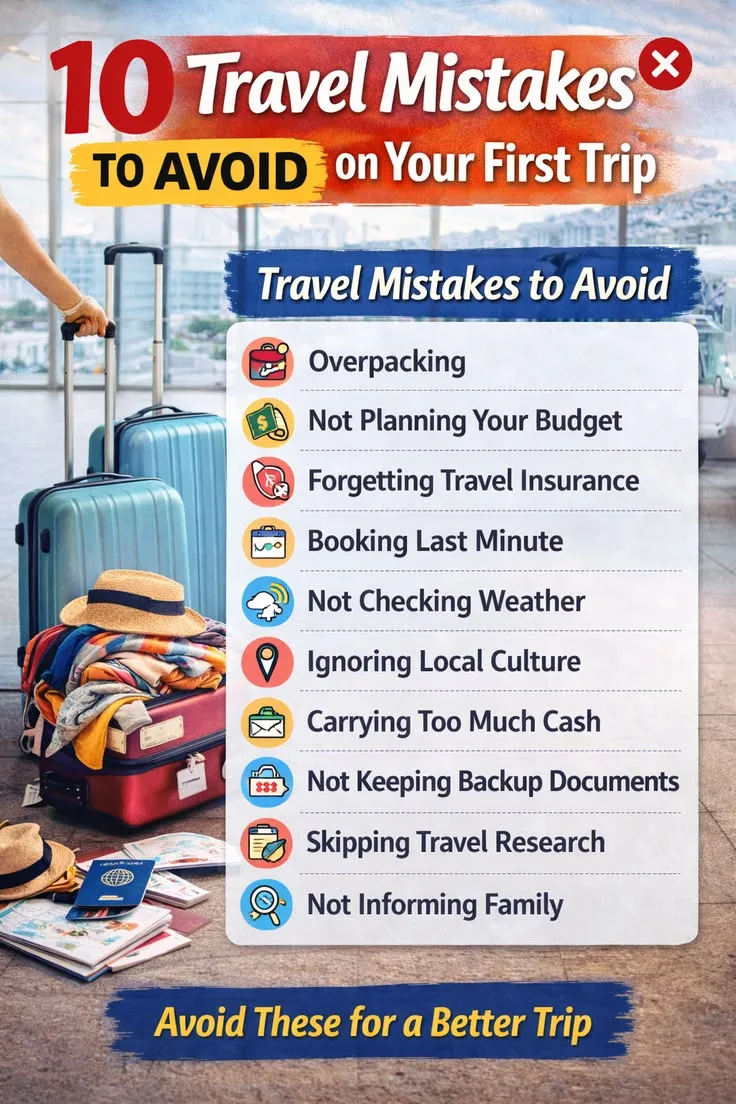
Mistake 6: Booking Everything at the Last Minute
Last-minute bookings often result in higher prices and fewer options.
Flights, hotels, and popular tourist attractions may become expensive or fully booked during peak travel seasons.
Planning ahead gives travellers more choices and often better prices.
However, avoid creating an overly rigid itinerary. Leaving some free time allows you to explore unexpected opportunities and enjoy spontaneous experiences.
Mistake 7: Trying to Visit Too Many Places
Many beginners attempt to include too many destinations in one trip.
Constant travelling between cities or countries can become exhausting and reduce the time available to truly experience each location.
Instead of rushing through multiple destinations, focus on quality rather than quantity.
Spending more time in fewer places allows you to appreciate local culture, food, history, and attractions more deeply.
A relaxed itinerary often creates more enjoyable memories.
Mistake 8: Ignoring Local Culture and Customs
Every destination has its own traditions, social expectations, and cultural practices.
Failing to respect local customs can unintentionally offend residents.
Learning a few basic phrases in the local language, dressing appropriately where required, and understanding cultural etiquette demonstrate respect and improve interactions.
Travelling responsibly includes appreciating cultural diversity while adapting to local norms.
Mistake 9: Forgetting Health and Safety Precautions
Health should remain a priority during every journey.
Before travelling, check whether vaccinations, medications, or health advisories apply to your destination.
Carry essential medicines, a basic first-aid kit, and any prescription medications you regularly use.
Drink safe water, eat from hygienic establishments, and practise good personal hygiene throughout your trip.
Being prepared helps reduce health-related risks while travelling.
Mistake 10: Depending Entirely on Internet Connectivity
Many travellers assume internet access will always be available.
However, network coverage may be limited in certain locations, and international data charges can become expensive.
Downloading offline maps, travel guides, hotel details, and transportation information before departure can be extremely helpful.
Keeping important information accessible without internet access improves convenience during emergencies.
Mistake 11: Not Protecting Valuables
Tourist destinations sometimes attract pickpockets and opportunistic thieves.
Avoid carrying large amounts of cash or displaying expensive jewellery and electronic devices unnecessarily.
Use secure bags, keep valuables close, and store important documents safely.
Hotel safes, money belts, or anti-theft backpacks can provide additional security.
Remaining alert in crowded areas reduces the risk of theft.
Mistake 12: Skipping Local Food Experiences
Some first-time travellers eat only familiar international food throughout their trip.
Trying authentic local cuisine is one of the most enjoyable parts of travelling.
Local dishes often reflect the culture, traditions, and history of a destination.
Choose clean, reputable restaurants and gradually explore regional specialities while considering any dietary requirements.
Food experiences frequently become some of the most memorable parts of a journey.
Mistake 13: Not Allowing Time for Rest
Travelling can be physically demanding, especially when adjusting to different climates, time zones, or long walking distances.
Scheduling every hour with activities may lead to exhaustion.
Including relaxation time between sightseeing allows the body to recover and helps maintain energy throughout the trip.
A balanced itinerary supports both enjoyment and well-being.
Mistake 14: Ignoring Sustainable Travel Practices
Responsible travel benefits both visitors and local communities.
Simple actions such as reducing plastic waste, respecting wildlife, supporting local businesses, and following environmental guidelines help preserve destinations for future travellers.
Sustainable tourism also encourages meaningful cultural exchanges and protects natural attractions.
Travelling responsibly contributes to positive experiences for everyone.
Essential Travel Tips for Beginners
Successful travel depends on preparation, flexibility, and awareness. Always arrive early for flights or train departures, keep emergency contacts accessible, charge electronic devices regularly, carry a portable power bank, and remain aware of your surroundings.
Stay open to new experiences while being cautious with personal safety. Remember that unexpected changes are a normal part of travelling, and maintaining a positive attitude helps solve minor challenges more easily.
Learning from each trip gradually builds confidence and makes future travel even more enjoyable.
Building Confidence Through Travel
First-time travel often feels overwhelming because everything is unfamiliar. However, every experienced traveller started with a first journey.
Each trip teaches valuable lessons about planning, communication, budgeting, navigation, and cultural understanding. These experiences increase confidence and make future adventures easier to organise.
Travelling also develops independence, adaptability, and problem-solving skills that benefit many areas of life beyond tourism.
Conclusion
Your first trip is an opportunity to discover new places, experience different cultures, and create lifelong memories. While mistakes are a natural part of learning, careful preparation can help you avoid many common travel problems. Researching your destination, packing wisely, managing your budget, respecting local customs, protecting important documents, and prioritising health and safety all contribute to a smoother and more enjoyable journey.
Rather than trying to create a perfect trip, focus on staying flexible and embracing new experiences. Every destination offers valuable lessons and unforgettable moments. By avoiding these common travel mistakes and following practical travel advice, first-time travellers can enjoy greater confidence, reduce unnecessary stress, and make the most of every adventure.
Read more – topstablegames.com