Water is essential for nearly every bodily function, from regulating temperature and transporting nutrients to supporting joint health and cognitive performance. Yet advice about how much to drink remains surrounded by persistent myths. The familiar instruction to consume eight glasses of water daily has become cultural shorthand for good health, even though it lacks a solid scientific foundation. Understanding actual fluid needs requires looking beyond rigid rules and recognising the factors that shape individual requirements.
The Origin and Limits of the Eight-Glass Rule
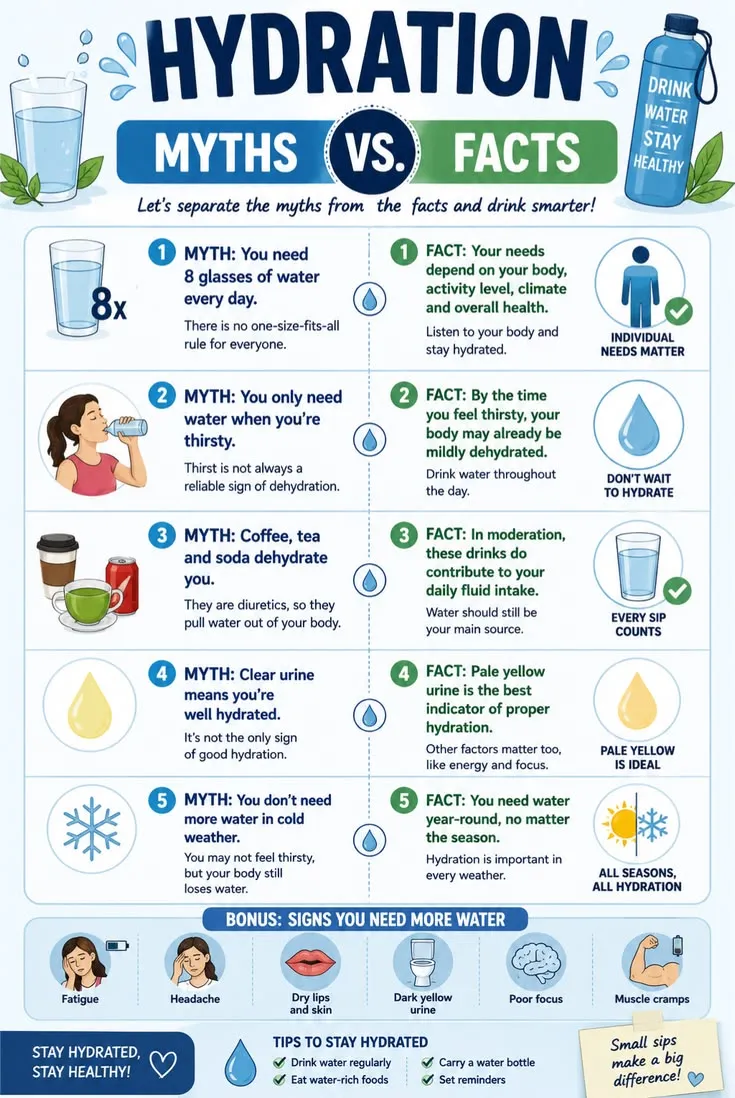
The widely repeated recommendation of eight eight-ounce glasses per day traces back to mid-twentieth-century dietary guidance. A 1945 reference suggested roughly 2.5 litres of water daily for adults, but it also noted that much of this intake could come from food. Over time the nuance disappeared, and the figure hardened into a simple prescription focused exclusively on plain water. Later reviews found no rigorous studies supporting a universal eight-glass target.
Contemporary guidelines take a different approach. The National Academies of Sciences, Engineering, and Medicine set adequate intake levels for total water—covering beverages and the moisture in food—at approximately 3.7 litres per day for men and 2.7 litres for women. European recommendations are somewhat lower, around 2.5 litres for men and 2.0 litres for women. These figures represent observed intakes that support adequate hydration in healthy populations rather than strict minimums. Because food typically supplies about 20 percent of total water, the volume that needs to be drunk is lower than the headline totals.
Why Individual Needs Vary Widely
No single number suits everyone. Body size, activity level, climate, altitude, and life stage all influence fluid turnover. A larger person loses more water through breathing and skin evaporation than a smaller one. Prolonged exercise or work in hot, humid conditions can increase losses dramatically through sweat. Pregnancy and breastfeeding raise requirements, as do periods of illness involving fever or gastrointestinal fluid loss. Older adults may experience a diminished thirst response and therefore need more deliberate attention to fluid intake.
Research using isotopic tracers to measure actual water turnover across thousands of people confirms this variability. Average daily turnover differs substantially between sedentary individuals in temperate climates and active people in demanding environments. The body continuously adjusts kidney function and thirst signals to match losses, making a fixed daily quota less useful than responsive habits.
Common Myths and the Evidence Against Them
One frequent claim is that thirst is an unreliable or late indicator of dehydration. For most healthy adults, thirst functions effectively as an early warning system. It arises when the body detects a rise in blood concentration of salts and signals the need to restore balance. Waiting until thirst appears does not place the average person in immediate danger, although people working or exercising in extreme heat should drink proactively to stay ahead of losses.
Another myth holds that caffeinated drinks such as coffee and tea dehydrate the body. Moderate caffeine intake does not offset the fluid provided by these beverages. The water content far exceeds any mild diuretic effect, so coffee and tea contribute to daily hydration totals. Sparkling water is equally effective as still water. Milk, juices, and herbal infusions also count.
Claims that drinking far beyond thirst “flushes toxins” or confers special health benefits lack strong support. The kidneys already filter large volumes of blood each day and regulate water balance tightly. Excess fluid is simply excreted. While adequate hydration supports kidney function and can help prevent certain issues such as kidney stones in susceptible individuals, forced overconsumption offers little additional advantage for healthy people and can, in rare extreme cases, dilute blood sodium to dangerous levels.
Practical Ways to Meet Fluid Needs
Most healthy adults can rely primarily on thirst, supplemented by awareness of circumstances that increase losses. Drinking when thirsty, with meals, and around physical activity covers the majority of requirements. Carrying a reusable bottle makes it easier to respond promptly. Monitoring urine colour provides a simple check: pale yellow generally indicates adequate hydration, while consistently dark urine may signal the need for more fluid.
Food contributes meaningfully. Fruits and vegetables with high water content—watermelon, cucumbers, oranges, strawberries, and leafy greens—add to daily totals without conscious effort. Soups and yoghurt supply additional moisture. Including these foods regularly reduces the volume that must come from drinks alone.
During extended exercise or heat exposure, additional fluid is warranted. Drinking before, during, and after activity helps replace sweat losses. For sessions lasting longer than an hour, especially in hot conditions, beverages containing electrolytes can be useful, though plain water remains sufficient for most everyday needs.
Special Considerations and When to Seek Guidance
Certain groups benefit from more structured attention. Older adults, people with certain medical conditions, and those taking medications that affect fluid balance may not experience reliable thirst signals. Pregnant and breastfeeding individuals have elevated needs that should be discussed with a healthcare provider. Anyone with a history of kidney stones or specific medical advice regarding fluid restriction requires personalised guidance rather than general recommendations.
Symptoms of inadequate hydration include persistent dry mouth, fatigue, headache, reduced urine output, and dark urine. Severe dehydration demands prompt medical attention. Conversely, excessive intake that produces clear urine throughout the day and frequent urination is usually unnecessary for healthy individuals.
A Balanced Perspective on Daily Hydration
The most useful approach combines awareness of official total-water guidelines with respect for the body’s own regulatory systems. Needs fluctuate from day to day. A sedentary day in cool weather demands less fluid than an active day in heat. Listening to thirst, eating water-rich foods, and adjusting for activity and environment provides a more accurate and sustainable strategy than chasing a fixed number of glasses.
Hydration supports energy, concentration, physical performance, and overall comfort. By discarding outdated myths and focusing on responsive habits grounded in current evidence, most people can maintain adequate fluid balance without complexity or anxiety. The body is already equipped with precise mechanisms for managing water. Supporting those mechanisms with sensible daily practices is usually all that is required.
Read more – Aeshikshakosh.com