The Supreme Court of India on 13 October 2026 temporarily halted the criminal defamation trial against Congress leader and Leader of the Opposition in the Lok Sabha, Rahul Gandhi. The case relates to remarks he allegedly made in 2018 against Prime Minister Narendra Modi in connection with the Rafale fighter jet deal controversy. A bench of Justices Vikram Nath and Aparesh Kumar Singh issued notice on Gandhi’s petition and directed that further proceedings before the trial court shall remain stayed.
The Supreme Court Order
The bench was hearing Gandhi’s challenge to a 8 September 2026 order of the Bombay High Court. That High Court order had refused to quash the criminal defamation proceedings pending against him. Senior advocate Abhishek Manu Singhvi appeared for Gandhi and submitted that the legal issues involved were settled by earlier decisions of the apex court.
The Supreme Court issued notice returnable in four weeks to the Maharashtra government and the complainant. In the interim, it directed that the trial court proceedings shall remain stayed. The matter has been listed for further hearing after the respondents file their replies.
The stay is an interim measure. It does not decide the merits of the defamation complaint or finally dispose of the petition seeking quashing of the case.
Origin of the Case
The complaint was filed by Mahesh Shrishrimal, a Bharatiya Janata Party worker, before a Metropolitan Magistrate’s court in Mumbai (Girgaum). The complainant alleged that Gandhi made defamatory statements during a public speech in Rajasthan on 20 September 2018. The remarks, made in the context of the political debate over the Rafale aircraft deal, allegedly included references to the Prime Minister as “Commander-in-Thief” and “Choro Ke Sardar” (chief of thieves).
According to the complaint, these statements lowered the reputation of the Prime Minister and, by extension, caused injury to the reputation of BJP members and supporters. The magistrate had issued process against Gandhi in August 2019. Gandhi challenged that summons before the Bombay High Court, which dismissed his petition on 8 September 2026, holding that there was no manifest illegality in the magistrate’s order.
Gandhi’s Challenge and Legal Arguments
In his petition before the Supreme Court, Gandhi has questioned the maintainability of the complaint. The central argument is that the remarks did not target an identifiable and definite class of persons in a manner that would give every member of that class the right to prosecute a defamation case. Gandhi’s side has contended that the statements were directed at the Prime Minister in the course of political criticism and did not amount to defamation of the entire membership of a political party.
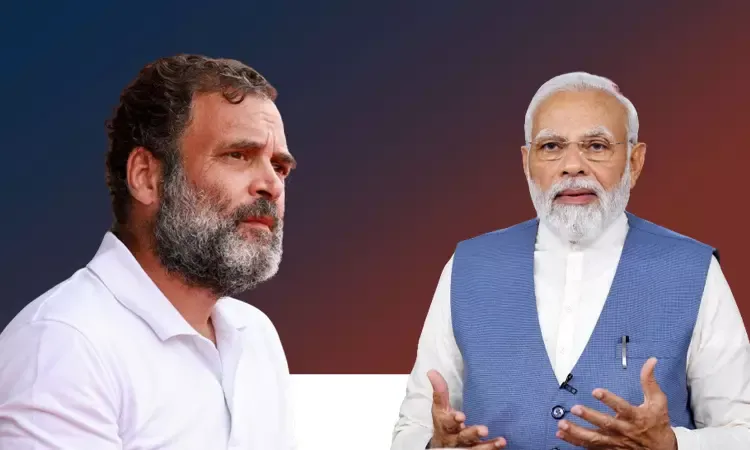
The complainant has maintained that by describing the Prime Minister, who is a leader of the BJP, in those terms, the statements effectively imputed dishonesty to the party’s members and thereby caused collective reputational harm. The High Court had accepted that the BJP could be regarded as an identifiable body for the purpose of the complaint.
Context of the 2018 Remarks
The statements in question were made during a period of intense political debate over the Rafale fighter jet procurement. Opposition parties, including the Congress, had raised questions about the deal’s pricing, the choice of an Indian offset partner, and related decision-making. The government had defended the procurement process. The remarks attributed to Gandhi formed part of that broader political exchange.
Criminal defamation proceedings under the relevant provisions of the Indian Penal Code (as applicable at the time) can be initiated by private complainants. Such cases often raise questions about the balance between the right to free speech, particularly in the political domain, and the protection of individual reputation.
Significance of the Stay
The Supreme Court’s interim order provides temporary relief to Gandhi by pausing the trial court proceedings. It allows the apex court time to examine whether the High Court was correct in declining to quash the case at the threshold. The four-week period for replies will enable both the state and the complainant to place their positions on record.
The case has drawn attention because it involves a senior political leader and remarks directed at the Prime Minister. Similar defamation complaints arising from political speeches have been the subject of earlier judicial scrutiny, with courts often examining whether the statements fall within the realm of legitimate political criticism or cross into actionable defamation.
Next Steps
The matter will next be taken up after the Maharashtra government and the complainant file their responses. The Supreme Court will then decide whether to continue the stay, hear the petition on merits, or issue further directions. Until then, the trial court cannot proceed with the defamation case against Gandhi.
The order underscores the apex court’s role in examining challenges to the continuation of criminal proceedings that arise from political speech. While the stay is limited in scope and duration, it keeps the focus on the legal questions surrounding locus standi, the identification of the allegedly defamed class, and the threshold for allowing such complaints to proceed to trial.
Read more – personlifebio.com