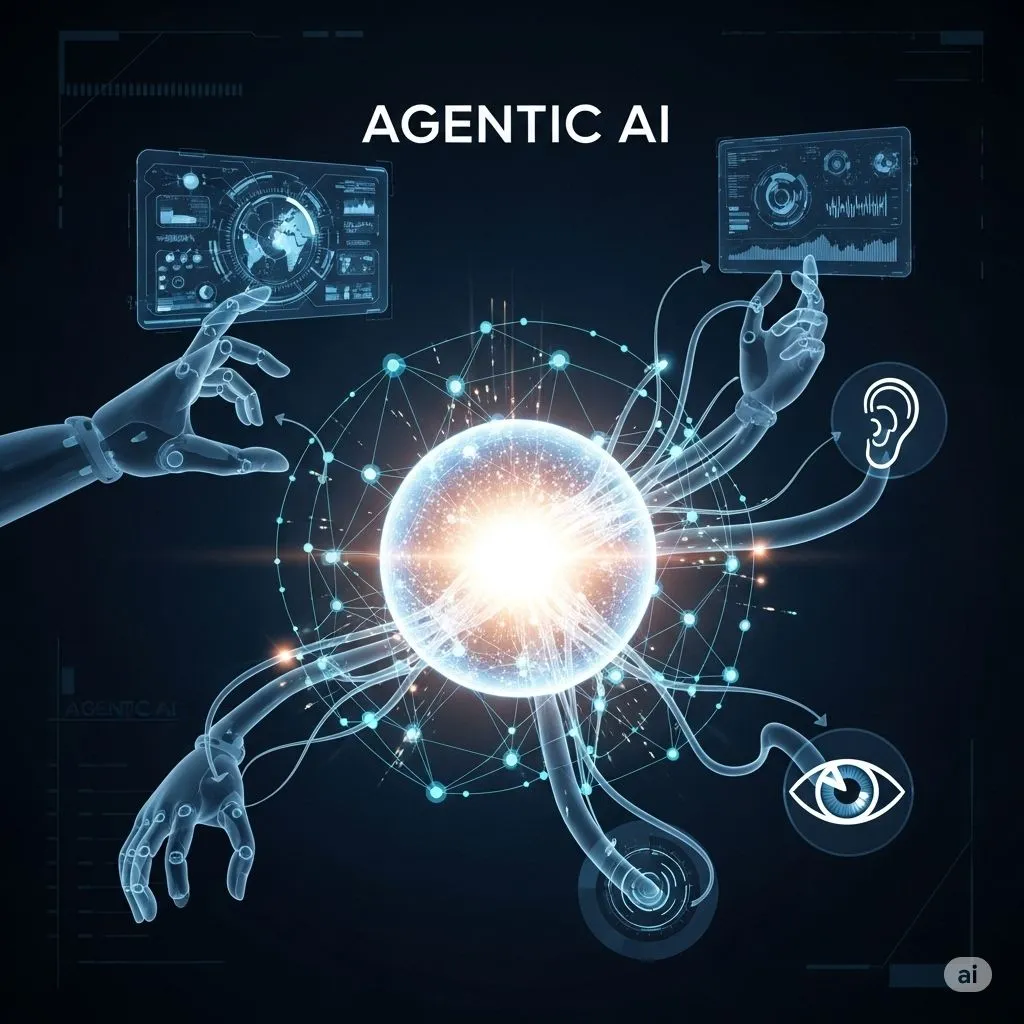
Agentic AI has emerged as one of the most discussed technologies in enterprise circles. Capable of acting with a degree of independence, these systems promise to handle tasks, trigger workflows and deliver outcomes with minimal constant human intervention. Yet according to Arundhati Bhattacharya, President and CEO of Salesforce South Asia, the technology is frequently misunderstood. In a recent conversation, she emphasised a simple but critical point: agentic AI is not a magic wand. Leaders who treat it as one risk disappointment, inefficiency and unintended consequences.
Understanding the Limits of Agentic Systems
Bhattacharya has repeatedly stressed that the biggest misconception surrounding agentic AI is inflated expectation. Organisations often assume that deploying agents will automatically solve complex business problems. In reality, these systems excel at defined, specific functions. They perform best when the task is clearly scoped, the data foundation is reliable, and the boundaries of their authority are explicit.
“You can’t wave it and solve everything,” she has noted. Instead of scattering agents across every process, leaders should first identify precise use cases where automation can deliver measurable value. Only then should the technology be put to work. This disciplined approach prevents the common pattern of endless pilots that generate more questions than answers and fail to move into meaningful production.
Guardrails, Context and the Importance of the Harness
Whether deploying human talent or AI agents, certain fundamentals remain constant. Clear role definition, appropriate permissions, ongoing oversight and alignment with organisational goals are non-negotiable. For agentic systems, these elements take the form of technical and policy guardrails.
Bhattacharya advises organisations to instruct agents precisely: they are authorised to perform particular actions and no more. Expanding scope without corresponding controls increases risk. Equally important is what she and her colleagues describe as the “harness” — the contextual framework that embeds the organisation’s vision, processes, risk appetite and ethical boundaries into the agent’s operating environment. Without this harness, even capable models can drift from intended behaviour or produce outputs that fail to serve the enterprise’s actual needs.
Trust remains a foundational value. Agents must operate within secure, explainable parameters so that their decisions can be audited and corrected when necessary. Human oversight does not disappear; it evolves into supervision of both people and digital workers.
Humans and Agents as Complementary Forces
A consistent theme in Bhattacharya’s comments is that agentic AI is designed to augment rather than replace human capability. Agents absorb repetitive, rule-based and high-volume tasks. This frees people to concentrate on judgment, nuanced problem-solving, relationship management, ethical considerations and strategic direction — areas where human experience continues to hold clear advantage.
In practical terms, the workplace of the near future will feature mixed teams. Managers will orchestrate both human colleagues and AI agents. Individual contributors will increasingly build, refine and oversee agents as part of their daily responsibilities. Bhattacharya has observed that the current generation may be among the last to manage purely human teams. The shift is structural and lasting.
This transition places a premium on skills development. As basic coding and routine analytical work become increasingly automated, professionals must strengthen higher-order capabilities: systems thinking, domain expertise, prompt design, ethical reasoning and the ability to evaluate agent performance. Continuous learning is no longer optional; it is a core requirement for remaining relevant in technology-driven environments.
From Experimentation to Purposeful Deployment
Many organisations remain stuck in pilot mode. While experimentation has value, prolonged testing without production deployment limits impact. Bhattacharya encourages leaders to select a small number of high-value use cases, equip the agents with the right data access and permissions, establish robust guardrails, and move deliberately into scaled operation. Measuring both quantitative returns and qualitative improvements in customer or employee experience helps refine the approach over time.
Success depends heavily on underlying foundations. Fragmented data, inconsistent processes and weak governance undermine even sophisticated agents. Strengthening data quality, standardising workflows and clarifying accountability create the conditions in which agentic systems can deliver reliable results.
Leadership Responsibilities in an Agentic Era
The introduction of AI agents does not diminish the role of leadership; it expands it. Leaders must decide where automation adds genuine value, how much autonomy is appropriate, and what oversight mechanisms are required. They must also communicate clearly with employees about changing responsibilities and invest in the reskilling necessary for the new environment.
Treating agentic AI as a strategic capability rather than a quick technological fix changes the conversation. It moves organisations away from hype-driven adoption and toward thoughtful integration that respects both the power and the limitations of the technology. When agents are deployed with clear purpose, strong context and appropriate human supervision, they become powerful amplifiers of organisational capacity. When they are introduced without those disciplines, they risk becoming expensive distractions.
A Measured Path Forward
Agentic AI represents a significant evolution in how work can be organised and executed. Its ability to act independently within defined parameters opens new possibilities for efficiency, responsiveness and scale. Yet its effectiveness hinges on human judgment at every stage — from selecting use cases and designing guardrails to monitoring outcomes and continuously refining the system.
Arundhati Bhattacharya’s central message is one of realism tempered with opportunity. Agentic AI is a substantial force, but it must be tempered and directed. Leaders who understand its specific functions, install proper controls, maintain human oversight and focus on concrete business needs will extract meaningful value. Those who expect a magic wand will likely find that the technology, like any powerful tool, performs best when guided by clear intention and disciplined execution. In the emerging workplace of humans and agents working side by side, that disciplined approach will separate successful transformations from costly experiments.
Read more – sevendollarmiracle.com